Blog Layout

Wednesday, September 2, 2015

I've Been Published!


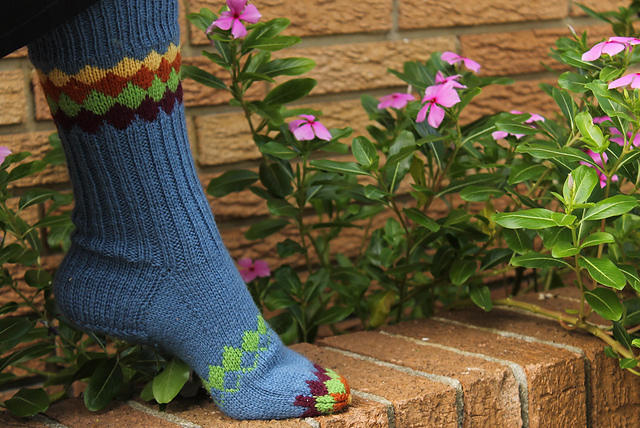
Well, no, my writing hasn't been published. But I designed a sock knitting pattern which was accepted for publication by an online knitting magazine. The great thing about it is that, although all the patterns are free, each designer is paid a nice little sum by the magazine.
If any of you are knitters, go and check it out HERE!
It's really quite a simple pattern; it would be a great way to try knitting socks or knitting stranded colorwork for the first time. There are two versions of it: the one pictured here, and another one using only three colors instead of five. The color combinations are endless!
One thing I really enjoyed about designing the pattern was how everything seemed to work out perfectly. The little diamond motifs are a 6-stitch repeat, which works out perfectly for a 9 to 9 1/2 " foot circumference knitted at 8 stitches an inch. Everything just flowed out of that.
However, designing the other two sizes took a bit more work. I feel like I learned a lot just from working with the editor of Knitty; sometimes it got pretty frustrating, but I think I'm better prepared now to work with an editor if I ever try to get my writing published.
I am very happy with my pattern, and all the back-and-forth .docs and all the charting and recharting were worth it in the end.

Interlock Socks
designed by Laura Andrews

Tuesday, August 11, 2015

Blog Tour - Implant by J. Grace Pennington

Hey, everyone! Today I have an interview with author J. Grace Pennington, who is coming out with her newest book, Implant, on August 15. Preorder here.
She has self-published several novels, including Never, a Western, and three books so far in the science fiction series Firmament. I'm very pleased to be able to introduce her to you!


Hello, Grace. Thank you so much for letting me interview you! Let's get this started.


Can you tell us about your latest book?

Sure! Implant is in essence a young adult time travel dystopia with steampunk elements.
Complicated, I know, so I usually just refer to it as a young adult dystopia.  It’s the story
of nineteen-year-old Gordon Harding, who gets pulled into a future world where
everyone on earth is controlled by means of a medical implant.  He is then asked to
destroy the Implant control center.  Adventure ensues.

Where did the idea for Implant come from?

It was a combination of two ideas, actually.  One was the idea for a relationship of mutual
respect between two men who hated everything about each other.  The other was just my
take on a pretty standard sci-fi trope of the one person who for whatever reason hasn’t
gone along with modern technology being the one person who can save the world when
the technology takes over.  In this case, the technology was a cure for cancer (and later
everything else).  And to find someone without it, they had to take someone out of the
past.

Who is your favorite character from Implant?

Doc.  No surprise to those who know me.  I tend to love both doctor characters, and
grumpy old guy characters.  Doc is both.  Hence I love him.

What was the hardest thing about writing it?

The plotting and planning the characters have to do.  My strong point is character,
relationship, emotion.  Coming up with elaborate plans to capture people, destroy things,
and infiltrate places?  Not so much.

Who was the most difficult character to develop and write?

Probably the Head.  The Head is the controller of the Implants, and therefore the world,
and as usual, it was a struggle to keep the villain from being all pure evil and I-want-to-
take-over-the-world.  It took several drafts to come up with a more justifiable motivation.

Is anything in Implant based off of personal experience?

Not directly, but I put a lot of myself into Gordon, so a lot of his thought processes and
reactions are based off of how I would probably react in that situation.  He’s a bit more
impetuous than I am, but we share a lack of confidence somehow fused with
stubbornness and our own form of arrogance, and a huge amount of fear while still being
braver than we sometimes realize.

What books or movies inspired you while planning/writing?

Mostly books and movies I hadn’t seen or read!  My dad had told me about an episode of
some TV show where no one reads anymore, they just have information beamed to their
brains, but one guy’s brain can’t do it, so he still reads--and then when the computer that
beams the information takes over, that guy is the only one who can fix things.  The same
for movies like Logan’s Run and I, Robot.  It’s the skeptics of new technology who often
have the upper hand in these stories.  To a lesser degree, when revising, I was inspired by
the Divergent series in some ways, mostly stylistically.

What is your favorite line from Implant?

“And I still think you’re an emotional baby.”
(You have to see it in context to understand.)

Is Implant a stand-alone, or the first in a series?

It’s standalone.  I have some vague ideas for a trilogy, but it would be fairly complex, and
I’m not sure I could pull it off.  But we’ll see.  Maybe.

If it was ever made into a movie, who would you choose to play the main character?

Probably Nat Wolff.  I could totally see him as Gordon.

Tell us a bit about your life as a novelist. When did you first start writing seriously?

That depends on what you mean by seriously.  I’ve been writing nonstop since I was five
years old, but I didn’t actually finish a novel until I was eighteen or nineteen.  And I
didn’t publish anything until I was twenty-two.  So depending on which you mean,
twenty years, seven years, or three years.

What was the first complete novel you wrote?

It was called Handprints in History, but it’s really better forgotten.  Like most first novels
it was--just bad.  Unrealistic, overdramatic, choppy, too minimalist, confusing.  But it
was 80,000 words, and it was the first time I stuck with a novel to the end, so it has a
special place in my heart.

I really loved Never, your Western novel. Do you plan to write any more westerns?

I don’t plan on it exactly, but I’m open to it.  I loved the world of Never, and I’d be
thrilled to write more like it.  But I haven’t had any other western ideas yet.  So I don’t
know.

What music helps you get in the mood for writing?

It depends on what I’m writing.  I usually listen to soundtracks in the genre of what I’m
writing, which for sci-fi is a lot of Jerry Goldsmith stuff, but if I’m sleepy I’ll switch to
rock or electronica to keep me alert.

If you could go anywhere for a week's vacation, and spend it writing to your heart's 
content, where would you go?

A little beach house all alone, so I could step out to the beach and stretch when I needed a
break, and then come back in and write in complete peace and quiet.  Ah, heaven!

Thank you for having me, Laura!

I really enjoyed having you. Thanks for being on the blog today!


J. Grace Pennington has been reading stories as long as she can remember, and writing them almost as long. She is also a prolific medical transcriptionist, amateur musician, chocolate eater, daughter, sister, friend, and laundry folder. She lives in Texas, and if she was part of the Implant society, her role in the rebellion would probably be monitoring current events and correspondence in the computer center.
You can follow her on her blog, Facebook, and Twitter.
Friday, July 31, 2015

Where the Music Ends

I have finished the rough outline for The Perilous Forest and have decided to change the title now instead of waiting until whoever reads this blog is used to the working title and is confused.
I've always known that The Enchanted Forest sounded like a light hearted story, maybe with fairies, which is definitely not what I wanted readers to expect when going into the story.
The Perilous Forest was better, but I didn't really like it because it's too generic. Fortunately when I first was writing the story, I posted it on InkPop (which went over to Figment a year or two ago) and asked for ideas for titles. One reader suggested Where the Music Ends, which is really the perfect title. Anyone who knows me knows that I have always had a problem coming up with titles. They've almost all been generic and boring: Prince Peter and the Goblin King (and about six other Prince Peter and books), The War for Erasthinia, The Tale of the Long Darkness, all of which basically tell you the plot of the story, and not even in an interesting way.
Of course, there is Red Sea Rising, possibly my proudest achievement in title making. It will probably never be written, though. And I rather like The Mind of the Queen, which may be written in the future.
To prove my abysmal titling skills, the political fantasy I referred to in my last post has the amazingly interesting working title of Risalia (the name of the main character). And why? Because I literally can't think of anything else. It might do, but I don't like it; I want a title that conveys something of the atmosphere of the book, or asks an intriguing question; a title that makes someone want to at least look at the back cover of the book, and then hopefully open it up.

So, getting off the topic of titles, I am really excited about this story! Not only have I, for the first time, outlined to the end of a story, but I am in love with it. The climax is going to be great.
I am completely sold on outlining now, that's for sure. It took me about ten years to realize that making everything up as I went was not a recipe for successfully completing a story. I considered myself a pantser, but that was only because I didn't understand how to outline. I would highly recommend Outlining Your Novel by K. M. Weiland. I'm not using all her suggestions, but I am using what is working for me. I have a feeling that as I get better at it, I'll tweak my methods and change how I do certain things, but there is one thing for sure: I'm never going back to writing by the seat of my pants for anything that has chapters.

And now, for another excerpt (keep in mind that this is a first draft, so it's not polished; but I am rather fond of it).

“I think we should be cautious.” Gilbert leaned back in his chair and sighed. “You do things much too hastily. Think about where we would be if we had gone by your impulses.”


“We might be rescuing Joseph right now, that's where!” She could almost feel the heat radiating off of her body, as if the fire were inside her instead of several feet away. “There is no reason to delay any longer. I refuse to delay past tomorrow morning. I'll go by myself if I must. And if you ...”


“I'm going to bed,” he interrupted, standing.


Alice stared at him. She wanted to shake him hard, to make him see sense, but instead she spun on her heel and headed outside, biting her tongue to keep from saying what she wanted to say.


“Don't forget your cloak; it's cold out!” Gilbert called after her. She ignored him.


*****


What do you think about the new title? How do you come up with titles? 


Wednesday, July 15, 2015

Thinking and Writing


I do a lot of outlining in my head before it ever reaches solid form on paper. I'll mull ideas over, fitting them with what I've already got, sometimes replaying scenes over and over (don't tell anyone, but sometimes I act them out when no one is looking) until I know exactly how I want them to turn out ... and then when I try to write them down they end up smaller, less impressive than I imagined them.
I was sailing along, planning out The Perilous Forest (that's just a working title, by the way), when I realized that there was really very little suspense, tension, whatever you want to call it, and it was bogging down after a certain scene. I've been trying for a week to work it out, and I think I finally have. I must say that outlining is really helpful. I do a stream-of-consciousness kind of outlining, where I simply sit down and have a conversation with myself, writing it out as I'm thinking it.
It's been a long time since I did this, actually. I used to have what I called a writing journal; whenever I was writing, and came upon a difficulty, I'd write through it until a solution came to me. But I never used it to actually outline anything.
The nice thing about having an outline is that you don't realize something a hundred pages in that can't be fixed by simply going back and editing. Of course, before I started an outline for The Perilous Forest, I was already about eleven thousand words in; I'm fully aware that I may have to go back to the beginning and change some things, but so far I think I'm safe.
I'll be glad to get this story written; it's been rattling about in the back drawers of my head for long enough. And as nice as having everything planned out is, it's even nicer to be able to write it out.
I'm not sure what I'll do with it when I'm finished; I may release it as a serial, or I may try to get it published. We'll see.
I also have another story that I've been trying to write for two or so years that could do with some serious, serious outlining. I've got some good ideas for it, but every time I try to write it it just falls so flat; it's what I call a political fantasy (heavy on the politics, light on the magic), and gets into some convoluted schemes, counter-schemes, machinations and intrigue. It's a lot of fun to think about, but there's something about it that just doesn't click. It possibly has to do with my main character, who no matter how hard I try to define her, she seems like a one-dimensional person. Every scene I write with her turns insipid. Unlike Alice, of The Perilous Forest, who is beautifully alive and makes me happy whenever I write her, even when she's trying to slap someone.

There are, of course, other stories knocking on my mind, trying to get out: half formed ideas, snippets of tales, bits and pieces of conversations. For my part I put them in my little boiling pot and let them simmer.
Oh, and I'm working on a Chronicles of Narnia fanfiction. I've had it completely written for three or so years, but it had gotten shoved down deep in my email files and needs to be rewritten and polished up. I'll be sure to let you all know when I start posting it!

What are your methods of planning a story? Do you ever outline? 


Monday, June 29, 2015

Hero, Anti-Heroes, Villains!

St. George Slaying the Dragon, Hans von Aachen


The big push nowadays is for the anti-hero. Not just a flawed good guy, but someone who is actually a bad guy who is the focus of the story and whom we are supposed to sympathize with.
I honestly don't know why. As a reader, I hate reading about someone like that. I don't want to read about someone who just goes around doing bad things (murdering, for instance); that's not a person I want to get behind and cheer on. I certainly don't want to be manipulated into somehow liking this person that I would never like in real life.
I have no problem with a villain who has some sympathetic traits. A completely evil villain can get dull. Someone morally complex, but also recognizably bad so that we can cheer when he is defeated, is much better (though I don't write off all villainous villains who only have money, or power, or revenge, in mind).
So, going from that to a hero, what is a hero?
I think we often get sucked into the trap of believing that a hero can't be awesome unless he's flawed and conflicted. I definitely think we should work on our heroes, for the most part, being realistic. But then, sometimes I just get a craving for a good old fashioned hero who may make the wrong choices (or not), but who is unflinchingly good and virtuous, who defies evil just by existing.
I find myself writing more complex (I hope) heroes and villains, but I think I, and a lot of people, will always be drawn as well to the archetypal good guy, the one who may be unattainable in his goodness but who draws us to him just by virtue of the fact that he is the opposite of evil and can always be relied upon.
For a Christian, saying that a perfectly good, moral character is always boring and one dimensional obviously ignores the fact that Jesus himself was neither boring nor one dimensional.
And anyone who says that a villain can never be pure evil apparently forgets about the Devil.
So really, what I'm saying is that as usual you can't say, "Here's how to do it, and otherwise your story will not be awesome."

(I do, however, think that just about every superhero ever invented is boring. Your mileage may vary.)

And one more thing, re: anti-heroes, is that I don't have a problem with a character who starts off as a villain and then changes. I love seeing a bad guy wrestling with his conscience and slowly beginning to turn from villain to hero. I just don't want the main character to be the villain all the way through, especially if he's against a good guy.

What are your thoughts on heroes, villains, and anti-heroes? Are there exceptions?

Wednesday, June 24, 2015

The Yearling


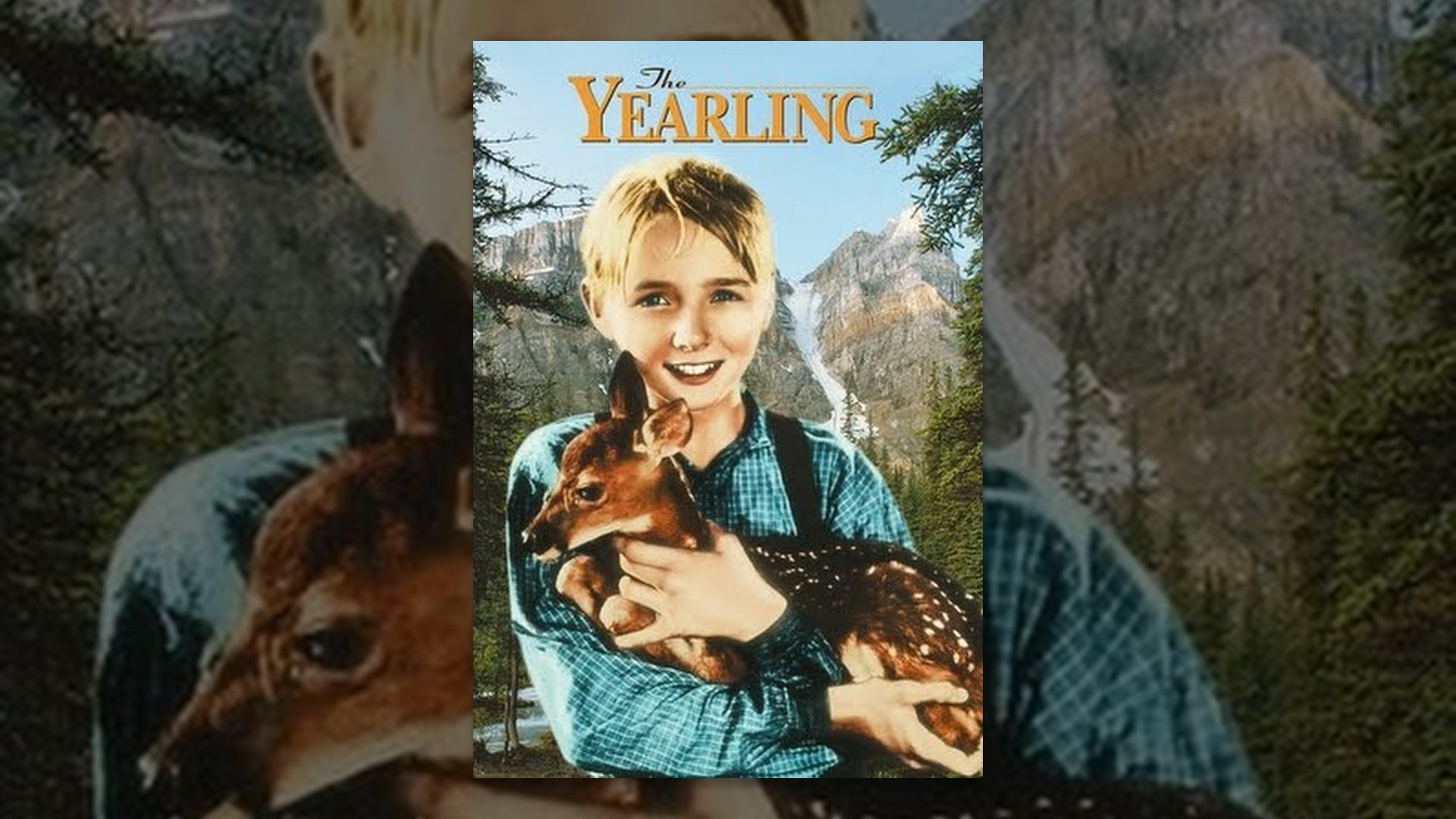
A few months ago I watched The Yearling with my granny. I really loved the movie; lots of good acting, especially from Claude Jarman Jr. as Jody (child acting can either make or break a movie in my opinion), beautiful scenery, and a wonderful story. Perhaps best of all, it's set in Florida, the place where I was born and raised, and where my family and I moved back to in 2012.
I found out we already had the book, and on this past Sunday afternoon I picked it up and started reading it. I usually find that if I watch a movie before reading the book it's based on, it's really difficult to then read the book because of all the differences between the two. I always have the movie's version in my mind, and especially when the order of things is different between the two it's hard to get into it.
I had no trouble getting into the book. The movie was actually, surprisingly, very faithful to the book (although it left out a few major things).
I guess the main difference between the book and movie was in the descriptions of the characters, and the people who ended up being cast. Gregory Peck, at 6' 3", is a far cry from the small, wiry Penny Baxter (actually nicknamed Penny because of how small he was even in adulthood), and Ma Baxter is described as a large and hefty woman while Jane Wyman is slender.
But that doesn't much matter to me.
Part of what I loved about this book was all the description of Florida scrub and swamp and the day-to-day living which the Baxters make on Baxter's Island.  Marjorie Kinnan Rawlings had an eye and ear for the smallest details; she obviously knew a whole lot about nature and she is able to make it interesting.
All the characters are clearly defined, very well developed, all the more remarkable for being written in a time period where character development wasn't common in books. The emotions are portrayed powerfully, from simple contentment to abject sorrow. Jody is written as a real child on the brink of his teenage years. He's irresponsible and dreamy, skipping chores when he can so that he can run off and play, but he thrives on listening to the men talk, and on hunts and other grown up activities.
The book is really more about Jody's growing up, becoming mature and responsible, than it is about the yearling fawn that he adopts. But the fawn isn't unimportant, either. For Jody, who doesn't really have anything else he can call his very own, the little animal is all important. He dotes on it as if it were his child and is willing to do everything in his power to keep it.
I love the backwoods grammar which the characters have (a favorite word of mine was 'faintified'); they're just simple people who don't have much learning, though Penny and Ma are determined that Jody get the education that he can.
Really, the book held my interest through from cover to cover though I knew pretty much what was going to happen (the last hunt of Old Slewfoot, however, was completely left out of the movie, and was a thrilling read because of not knowing how it would end).
The scene where Penny gets bitten by a rattlesnake is one of my particular favorites.

All in all, I would definitely rate this 5 stars, although I do have a few complaints. Mainly in regards to the use of the word 'damn' several times, as well as a few places where God is spoken of irreverently.
It also annoys me when characters who are regularly drunk are portrayed in too favorable a light (Ol' Doc and Buck Forrester) instead of being shown to have a destructive problem (Buck Forrester does make trouble near the end of the book, while drunk, but Ol' Doc is never any the worse for being stoned every time he's seeing to a patient).
But overall, this was a book that I think is one of the few Great American Novels of all time, and I would highly recommend it.

Sunday, June 21, 2015

Evocative Writing - The Senses


Anytime I smell a cinnamon apple candle, I am brought right to Christmas. It makes me think, not just of the candles we burn at that time of the year, but everything else that goes along with it: Christmas lights, songs that never grow old though I've heard them a hundred times, the atmosphere of Christmas and postcard depictions of sleighs and carolers and jolly old Father Christmas.

How can one little thing be so powerful? It's just a candle! I don't know the answer to that; but I do know that it's something that really happens, and happens to just about everyone, and has its own word to describe it.
I am very interested in evocative descriptions in my writing as well as that of others.
I remember the feelings a book gives me long after the last page is read; if it doesn't give me a strong feeling, where I almost physically react to it, then it hardly leaves an impression.
There is a bit from The Lord of the Rings that struck me when I noticed it way back when. I've always thought that Tolkien had a wonderful way with words, but I feel like he outdid himself on this one:

Suddenly a song began: a cold murmur, rising and falling. The voice seemed far away and immeasurably dreary, sometimes high in the air and thin, sometimes like a low moan from the ground. Out of the formless stream of sad but horrible sounds, strings of words would now and again shape themselves: grim, hard, cold words, heartless and miserable. The night was railing against the morning of which it was bereaved, and the cold was cursing the warmth for which it hungered. Frodo was chilled to the marrow.
-- The Fellowship of the Ring, Chapter 8: Fog on the Barrow Downs

Tolkien could have just said, 'Frodo heard a creepy song that made his blood run cold.' Instead, he lets us form a picture in our minds, as if we were right there with Frodo.
I'd like to point out a few things about the description.

Firstly, synonyms are OK; it's fine to use words that will help you describe without repetition. Just don't use obscure, annoying words that will pull the reader out of the moment. Tolkien, a master of language, uses no words here which are so unfamiliar as to break the spell by making us break out our dictionaries.

Secondly, he uses precise and weighty words. Murmur. Dreary. Grim. Railing. Bereaved.
Of course it's never a good idea to use words that make you sound snobby or as if you're using a word simply because it sounds 'older' or 'medieval'. It has to fit with what you're writing, and with your actual ability to use the words correctly. But think about it: 'A great error' sounds a lot more serious than 'a big mistake'.  'Railing against' something means more than just complaining about it. Know your words and use them to their full advantage and you'll be a lot closer to evoking a visceral reaction from your readers.

Thirdly, go the extra mile. Tolkien could have stopped at heartless and miserable. Instead, he went a step further and continued with The night was railing against the morning ... etc. which works beautifully to chill us to the marrow right along with Frodo. That bit 'tells' rather than 'shows'; however, it works because of the 'showing' that went before.


What are some of your favorite evocative descriptions that you've read? 


Monday, June 15, 2015

Character Development


I have a hard time with characters; they've always seemed very vague in my mind. I could see what they looked like, sort of, but their characteristics, their inner selves eluded me aside from the general labels of 'noble' or 'heroic' or 'villainous'.
I am much more plot driven. Exciting events, epic battles, rousing speeches are my forte. But of course for a story to be interesting, you have to have an idea of who your characters are. Now we could get into successful and really great stories where the characters aren't fleshed out and the plot often takes precedence over the people in the plot; but that's not my point here.
I thought I'd take a few minutes to explain how I flesh my own characters out.

First, I take larger personal traits like honest or quick tempered and use them as the building blocks. These are the things that are most immediately apparent about the character.

Second, I find the complement to those traits. If their most obvious trait is positive, then it needs to be balanced with a negative one. So if your character is, say, straight-down-the-line honest, then you could balance that with a lack of tact and a willingness to hurt someone's feelings needlessly.
On the other hand, if you have a quick-tempered character he/she might also be quick to feel the hurts of others and protective of a certain person/persons perceived as needing protection. He/she might (and probably will) be of the act now, think later group.

Third, when I write my characters, I check back over their actions and reactions to make sure they are acting true to their characteristics.
In my work-in-progress, my character Alice refused to go to the witch the first time they met; the second time, however, she agreed to go with her. This might seem like a contradiction, and at first it seemed like it to me. But there are a few things to consider:
1. Alice is definitely impetuous. She acts without thinking things through. Her first opportunity to refuse the witch, she did so out of fear and defiance. The second time, the witch promises her something she desperately wants, and despite the fact she can't really trust the witch, Alice acts on her desires rather than using her head.
2. Even after refusing to go to the witch the first time, Alice was conflicted on that point, going back and forth in her mind about her decision. This means that the second time, she was more likely to do what she wouldn't do before.
3. Her goal is not to stay away from the witch, but to rescue her brother. Although she is afraid of the witch, if she has to rescue him by going to the witch then she is willing to do that. The witch's persuasive ways are much more effective on someone with this mindset.

Fourth, always show your character for who he/she is. Don't tell us, "Pete was impulsive." OK, job done, now we don't have to show Pete actually being impulsive. In the Hardy Boy books, the author always makes a point of telling us near the beginning that Joe is the impulsive one, Frank the more thoughtful one. In the long run, though, both boys end up pretty much acting exactly the same (and usually agreeing completely with each other).

Which brings us to the the fifth and final point: characters with strong personality differences should clash. The thoughtful character should try to hold the impulsive one back, while the impulsive one should try to get the thoughtful one moving. And your characters should have different personalities. Just as each character should have traits that balance each other out, so you should have characters whose larger personalities balance things out between them.

By the way, I've never found character interviews or those long lists of questions about the character's parent's favorite food, etc. to be helpful; they overwhelm me with what seems to me to be useless information that doesn't further character development.
Instead, I will write out a short paragraph or two initially, stating in plain terms what the character is like as I envision him/her. Here is how I first describe my character Gilbert: Gilbert is thoughtful and likes to take things slowly. He can also be very moody. He uses persuasion first, but is not against getting physical. He does not read much; he would rather spend his time alone, taking walks or working in the smithy.
Later on as you think it through, you can add more specifics. Once I've done this, I find that my characters are more settled in my mind and they are easier to write.


I hope this has been helpful, and I'd love to hear your thoughts on how you develop your characters. Does it come easily to you or do you really have to work at it? Do lists of questions help or overwhelm you?